
I really wanted the title of this post to be boxing’s iconic opening: “Let’s get ready to ruuuummmmblllllle!”
But somewhere in the deep recesses of my memory—-past the Konami code–past the knowledge that my Dad promised that we’d stop at McDonald’s after the Wednesday evening church service on April 17, 1985…but we never did–even past the date of my anniversary*—-long past all of that was the nagging idea that the “Ruuuuummmble!” phrase had actually been trademarked.
*It’s somewhere in summer, right?
And, guess what? I was right! It’s not “boxing’s” iconic opening. It’s actually the announcer Michael Buffer’s iconic opening. And that’s fine, because when you hear him say it, you realize that he not only owns it…he owns it:
But, regardless, “rumbling” is the American way. At least, it’s the American way when it comes to arguing.
Why? Because we’re total morons. All of us. That includes me, and you’d better come to grips with the fact that it includes you.*
*You might say, “But I’m not American. I’m Canadian!” Well, you’re a moron, too. You just happen to be an exceedingly polite moron who’s “very sorry” for being one.
And how do I know this? Because I already know your reaction to that claim: “Oh, yeah?!? I got your argument right here, jerk!” [shakes fist]*
*Or, for the Canadian reaction: “That’s an interesting notion, you flag-waving, bald-eagle-worshipping redneck, eh?” [sips Tim Horton’s]
In the purest sense, the word argument comes from the Latin arguere which means “to make clear; prove.” The full use of arguere indicates that there is also a negative aspect to the word, for the full meaning is “to make clear; prove; accuse.” Thus, in its original form, the root of the word argument means effectively “to clearly prove an accusation.” But the main emphasis of the definition is upon the “clearly prove” aspect.
Unforturnately–and we’re still sticking with this root word arguere for the moment–we have focused on the negative aspect of that word (the “accusation” part) instead of the positive–and much more important–part of the word: “to make clear; prove.”
This issue has carried over to our (mis)understanding of the word argument. The purest expression of argument would be “a set of reasons with the intention of persuading.” This is usually in the context of determining moral right or wrong, but it would still be proper to use it in the context of determining whether something is factually correct or incorrect.
Unfortunately, the emphasis over time has been upon the “persuading” part of the definition rather than the actual core of the definition: “a set of reasons.” Consequently, the meaning of argument has devolved over time as our notion of “persuading” has devolved over time, so that argument now basically means “bickering” (at best) or outright “fighting” (at worst). This is so much the case that the first definition of argument that is usually found in a dictionary is now some variation of “bickering” or “quarrelling” or “fighting” instead of the original notion of presenting “a set of reasons.”
But that’s us today: “I’d like to present an argument” = “Let’s get ready to rumble!”
All of this is to go back to the last post where several definitions of prove were postulated by Reuben Hersh, and I* settled upon this one as the best, overall representative definition: “an argument that convinces qualified judges.”
*Well, it is my blog…
Well, if we don’t know what argument really means, then we have no hope of knowing what prove actually means.
If you take the true meaning of argument, then you get the following definition of prove: “a set of reasons that convinces qualified judges.”
However, if take the eroded definition of argument that means “bickering,” then the definition of prove takes on a whole new meaning: “a quarrel that convinces qualified judges.”
But that is actually a contradiction. You can not “browbeat” somebody into being “convinced.” You might be able to browbeat him into acceptance, but not conviction.
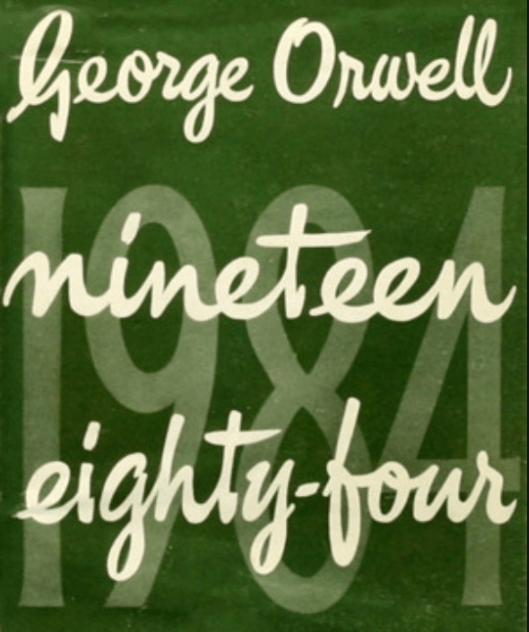
I suppose that the best-known example of this is from George Orwell’s 1984. At one point, the main character Winston Smith is told repeatedly and emphatically that “2+2=5”. Over time, Smith comes to accept this “fact,” but it is quite clear that he is never convinced.*
*Two side notes here.
(1) Forget Nostradamus; no one predicted future society as well as Orwell (except maybe for The Simpson’s). There have actually been “debates” on Twitter (that should tell you all you need to know right there) about the “white nationalist implications” of insisting that “2+2=4.”
(2) Though you can certainly force someone to take certain actions, you can never bully someone into a genuine belief. I find it ironically “good” that society is slowly breaking down morally in that it becomes more obvious our society’s need for Christ. During the “good ol’ days,” society pressured people into behaving according to Judeo-Christian mores without addressing the root need for Christ Himself. A “good” lost person is just as lost as a “bad” lost person; but–to our shame–we feel a lot better about ourselves when “good” lost people die without Christ.
At that unfortunately is where our contemporary definition of argument and consequently our contemporary definition of prove have left us. Any time we here someone say, “Let me prove it to you,” it has almost become a code phrase* for “I’m gonna shove this down your proverbial throat until you have no choice but to accept it.”**
*”Newspeak” for you 1984 fans!
**To use my sister’s “favorite” line from our dad: “You don’t have to like it. You just have to eat it.”
And in that case, there is no genuine proving that ever occurs.
I love Hersh’s definition of proof, but I can only do so if I keep in mind what argument truly means.
And I hope that this post has been an example of that. Were there some personal jabs in there? Yeah, I guess. But note that those jabs were not to demonstrate what the words prove or argument mean. Those jabs were mainly to prod you to think about your existing uses of those words.
From that point on, though, I tried (and only hope that I succeeded) to give a demonstration of the meaning of argument that was in keeping with that original meaning: a gradual revealing of reasons (beginning with the root meanings of argument way back with the Latin arguere) that built towards a final goal–namely, that a true argument actively avoids bickering or quarrelling and instead is a reasoned set of facts that lead to a conclusion.
In other words, there is a world of difference between “making an argument” and “being in an argument.” As we continue to look at what it means to genuinely prove something (with proof being “an argument that convinces qualified judges”), I hope that you have a better understanding of what arguments should be rather than unfortunately what they currently are.
Next time, I want to look at more of the definition of proof: What is meant by “convince”? What is meant by “qualified”? (That last one is going to be a doozy…)
 Quiet Contempt