So, after reading my last post, an astute reader* remarked to me that it seemed like a big set-up for a discussion about transcendence. Well, the reader wasn’t exactly wrong, because I do plan to talk about transcendence–eventually.
*I think that an honest conversation among ourselves would reveal that not a single person on the planet really knows what “astute” means. We just use this word because it seems like a way to both praise someone else while making sure that others know about our extensive vocabulary. After all, because others don’t know what “astute” means, they assume (ever so wrongly) that we do simply because of our using that word. And we keep using that word, but I do not think it means what we think it means.
But the real purpose of my last post was to get people to think about the need to go beyond ourselves (to transcend ourselves) in order to better observe ourselves.
As mentioned last time, mirrors and cameras help us do this. But in each case, we observe ourselves indirectly. We see pictures of ourselves. We see reflections of ourselves. We hear descriptions of ourselves from others. But at no point do we actually see ourselves.
Oh, sure, we see parts of ourselves. I can see my hands right now as I type this. I see a bit of my nose every time I open my eyes.* I see my feet when I’m putting on my socks.
*Just like you can see part of yours right now. Your nose is always there** and it is always in your field of vision. We’ve just become conditioned to ignore it…unless some crazed blogger mentions it…and then you can’t unsee it for a while.
**Voldemort excepted, of course.
Therefore, I can use direct observation to make a direct judgment about my hands: my fingernails are too short; my skin is too dry; that blister is healing nicely; etc.
But the point here is that my eyes are beyond my hands, giving them a perspective for judgment that my hands just don’t have. My eyes are better judges of my hands than my hands are of themselves.
And the whole point of a mirror is that when I have, say, an eyelash in my eye, to give my eyes a perspective that they just don’t naturally possess.
In other words, my eyes too busy seeing that they are unable to be seen themselves. Thus we use mirrors as a work-around for that.
And, frankly, that is the ultimate purpose of this entire blog: to act as a mental “mirror” to my own ideas. The ideas milling around in my head get taken out of my head (no surgery required!) and put into print.
And the analogy to a mirror holds up. Just as a mirror lets my eye see a reflection of its real self, so also are these words a “reflection” of the real ideas tucked away in my head.
For example, I’m looking right now at a water bottle. I can (and I hope already have) communicate that idea to you by saying those words: “I’m looking right now at a water bottle.”
But do really think that I am saying to myself, “I’m looking right now at a water bottle”?
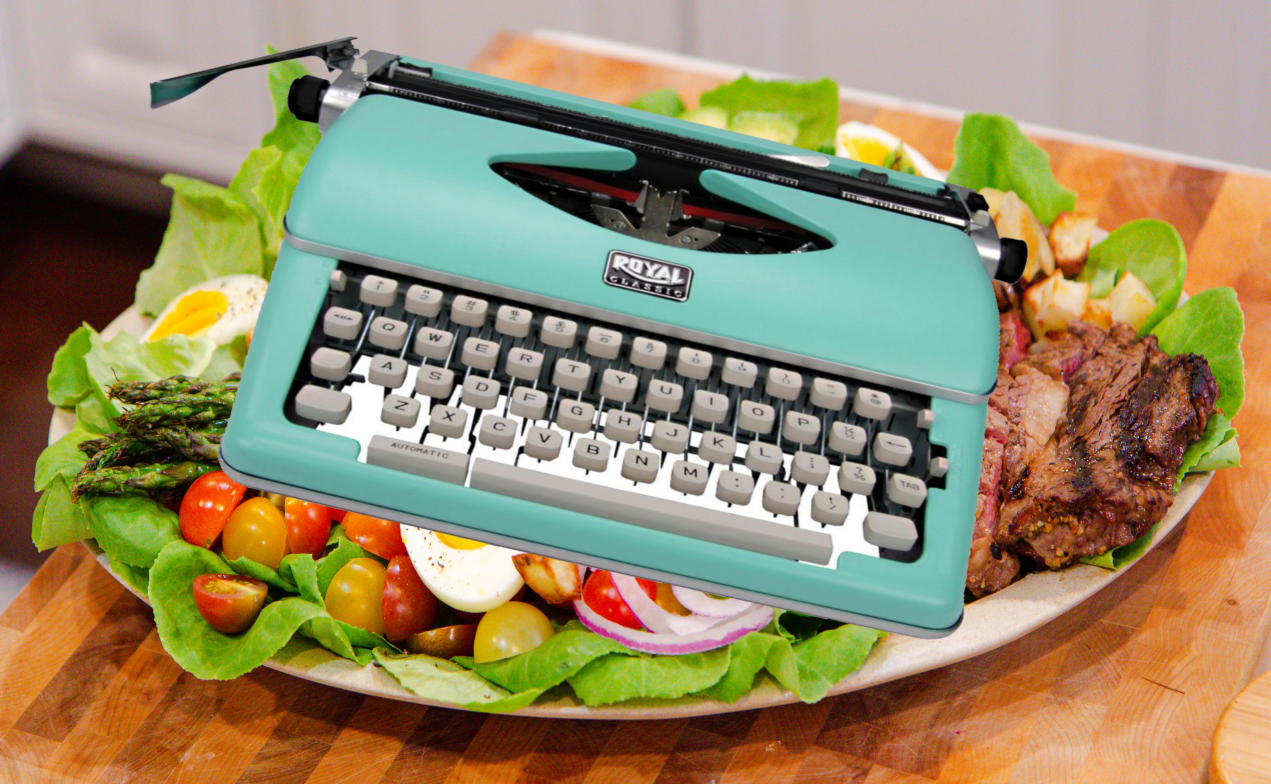
Of course not. My eyes see a water bottle, and my brain interprets that as a…water bottle. But it is only through the words that come out of my mouth or through the typewriter that allow my brain to convey my idea of a water bottle to others.
And it is only through the words that come out of my mouth or through the typewriter that allow my brain to convey my ideas about proofs and arguments and research and unicorns and well-manicured beards and paper-cut pain and rusted anchors and expensive cellphone plans and well-manicured beards and dirty forks and scented candles and tufted pillows and spicy tacos and well-manicured beards and Elvis songs and political opinions and chicken feed and marbled counters and marbled floors and marbled ceilings and well-manicured beards to others.
And usually once I see those words, I realize just how wrong my ideas really are.
Now, what you are reading here is something like the 4th or 5th draft of this post. It is not uncommon for the counter on my private WordPress editing page to show “28 revisions” by the time I publish a post. Yes, many of those “revisions” are just from me saving my work along the way.
But many of those revisions are the result of me reading what I just wrote and thinking, “The person who just wrote that is a real waste of carbon.”
And that’s where I (finally) get to the title of this post. All of those revisions…all of the changes…even all of the “I really wish I’d written that differently” re-evaluations that I do after I’ve finally publicly published a post…all of these are me “eating my words,” so to speak.
Basically, every post is this:
I write. I read what I wrote. I look at it in disgust. I edit what I wrote. I look at it again in disgust. I edit it a second time. I look at it again in disgust. I realize that what I’ve written can’t be salvaged by edits. I scrap entirely what has been written. I write something brand new. I read what I wrote this second time. I look at it in disgust. I edit what I wrote. I look at it again in disgust. I publish because I’m sick and tired of the whole process.
I think this idea was put well by the filmmaker David Fincher describing his own films: “Movies aren’t finished, they’re abandoned.”*
*https://www.filmindependent.org/blog/movies-arent-finished-theyre-abandoned-david-fincher-on-why-he-hates-watching-his-films/
In all fairness, I’ve heard this quote from others. In fact, Fincher himself introduces the quote with “They say…” I’ve even seen seen it attributed all the way back to Leonardo da Vinci stating that “Art is never finished, only abandoned.” However, I wanted to have a formal citation somewhere so that you could verify my sources.
This post? What you see now is something that was ultimately just abandoned.
But I guess the more important part of the previous sentence is the “what you see now” part. Abandoned or not, my ideas are still out there.*
*And, yes, I know you can read “out there” in two completely different ways.
Consequently, both you and I can now read what I wrote and both you and I can determine if my ideas are correct or not.
And that is the set-up for this entire post and the connection to the last few posts dealing with proof. Recall that I’m working with this definition of proof: an argument that convinces qualified judges.
The connection is that I am actually the last person who is qualified to determine if the ideas milling around in my head are valid or not. It is only by getting them out of my head by putting them on paper (or electrons, in this case) that I can now try to judge…to evaluate…to qualify those ideas.
Yes, by publishing this blog, I’m welcoming you into my thought processes. As a result, you are in a position to evaluate my ideas as well.
But your evaluation isn’t my primary concern. Don’t take that personally, though, because my primary concern is just getting these ideas out in the open. And these posts accomplish that goal.
The plan? It’s basically this: ideas –> words –> evaluation
More detailed: ideas (in my head) –> words (out of my head) –> evaluation
How many times have you said to yourself, “That sounded better in my head”? I’ve said it thousands of times to myself.
And that’s the ultimate point. Qualification is always an external process.
You would think that, if there was ever something you would be an expert on, it would be your own ideas. But even that turns out not to be the case.
Don’t believe me? Try explaining the simplest of tasks to someone else. An old adage is that “You never understand something until you’ve had to teach it.”
Think you know arithmetic? Offer to tutor a 5th grader in arithmetic.
Think you know American history? Offer to tutor someone in the subject.
Think you know “kids'” Bible stories? Offer to teach a Sunday School class.
Only in those situations do we find out just how UN-qualified we are in even the basics. Only in those situations do we finally expose our hidden–yet tainted–ideas.
“Sunlight is the best disinfectant,” the adage states.
But the great thing about it is that doing so forces us to confront those failures and ultimately forces us to improve.
And it’s then that we are finally in a position to begin understanding what qualified really means.
 Quiet Contempt